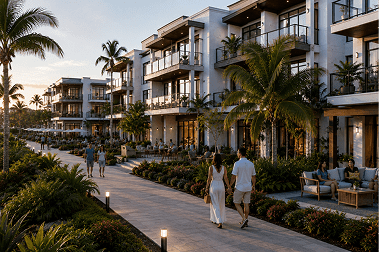
Virtuoso built the vision for meet up @ MM82 in 30 days
a Destination and a Legacy for the Keys
The Meet Up @ MM82 project began with an ambitious vision for the future of Islamorada: a water-first social district designed to increase length of stay, shift arrival behavior from highway to harbor, and create durable economic gravity without resort-scale density.
What emerged over the following month was far more than a development concept.
Using its proprietary AgentXQ platform, governance framework, and economic development methodology, Virtuoso developed a comprehensive destination strategy, ecosystem model, capital roadmap, and implementation plan that reimagined how a collection of independent assets could work together to strengthen the future of the Upper Keys.
For CEO and Chief Strategy Officer BJ Kito, the process began with a simple observation: Value was everywhere.
World-class fishing, an established hospitality businesses, exceptional waterfront access, conservation organizations, a distinctive culture shaped by the water and generations of stewardship, and more.
But much of that value existed independently. That disparity became the foundation for everything that followed.
“The opportunity wasn’t hiding in some future development,” says Kito. “It was already sitting there in plain sight. We wanted to understand how all of those assets, businesses, and experiences could begin creating value collectively instead of individually.”
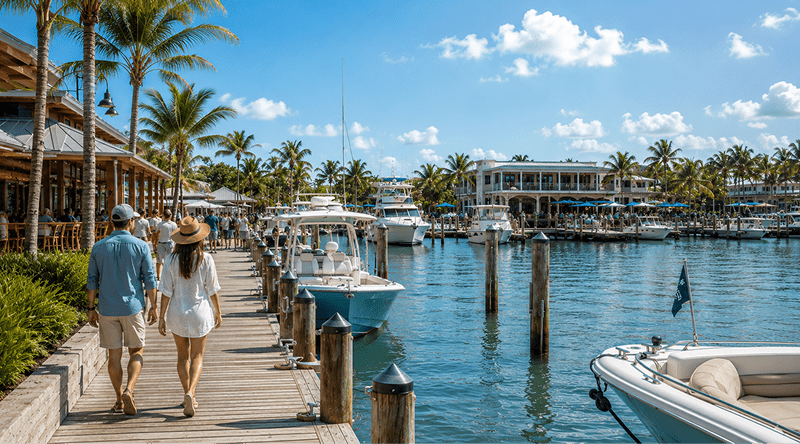
Reading the Destination
Before discussing buildings, land use, or investment opportunities, Virtuoso set out to understand the forces already shaping Islamorada.
AgentXQ evaluated tourism flows, cultural patterns, governance structures, environmental priorities, market dynamics, stakeholder interests, and economic conditions as interconnected parts of a larger system. The goal was not simply to determine what visitors were doing. It was to understand ‘why’ they were doing it, how they moved through the destination, and where opportunities existed to create stronger connections between people, places, and experiences.
As the research progressed, several patterns began converging.
Islamorada already attracted the right audience. Couples seeking relief from urgency. Families looking for meaningful experiences. Sport-lifestyle travelers centered around fishing, boating, and diving. Visitors are drawn to music, food, and community events. Demand was not the challenge. The deeper issue involved continuity.
Visitors could move through a remarkable collection of experiences without ever becoming connected to a larger rhythm. World-class daytime assets existed alongside hospitality venues, restaurants, marinas, and public spaces, yet those experiences often peaked independently. Energy was created throughout the day and then dispersed rather than accumulated.
“The destination already had demand,” says Kito. “What we kept seeing was unrealized value in the relationships between assets. There were opportunities for overlap, familiarity, participation, and continuity that simply weren’t being captured.”
Those observations would eventually become one of the defining insights of the project.
What AgentXQ Revealed
The challenge was not in attracting visitors, but in creating continuity between experiences.
Research uncovered:
- Strong daytime activity
- Short-stay visitation patterns
- Limited overlap between assets Underutilized public gathering opportunities
- Growing demand for experiential travel
- Strong local stewardship values
- Significant opportunity to increase dwell time and repeat visitation
The challenge was creating continuity between experiences.
The Idea That Kept Appearing
As the analysis deepened, one concept surfaced repeatedly across cultural, behavioral, economic, and tourism data: “Presence.”
Not as a marketing phrase, but as a measurable condition. Visitors increasingly valued experiences that felt participatory rather than transactional. Residents expressed strong stewardship values tied to authenticity and local identity.
Businesses benefited when visitors stayed longer, interacted more frequently, and moved between experiences rather than treating each stop as an isolated activity.
The cultural analysis proved especially revealing.
Islamorada’s identity was deeply tied to mastery (e.g., fishing, navigation, reef stewardship, marine knowledge, and generational expertise). The destination’s strongest differentiators were not manufactured attractions but living traditions that connected people to place.
“We became interested in what creates attachment,” says Kito. “What makes someone stay another day? What makes them come back? What makes a place continue occupying space in someone’s mind after they’ve left?”
The more the team explored those questions, the clearer the relationship became between presence and value creation. People who linger spend more. People who return require less marketing. People who participate develop stronger connections.
Economic activity becomes more resilient when it is reinforced by familiarity and community rather than novelty alone. Presence wasn’t simply a cultural insight. It was an economic one.
Presence Creates Value
As opposed to maximizing traffic, the strategy was designed to maximize overlap, familiarity, and participation.
- Length of stay increases
- Visitor spending rises
- Repeat visitation improves
- Marketing efficiency improves
- Community engagement strengthens
- Economic activity compounds
Seeing the Ecosystem
Once the team understood the role presence played in creating value, the conversation shifted from analysis to design.
The most significant opportunities were no longer individual properties, but the relationships between the properties. Public spaces influenced hospitality performance; restaurants extended activity into the evening; conservation organizations reinforced destination legitimacy; residential opportunities supported year-round stability; marinas shaped movement patterns; and educational experiences strengthened emotional attachment to place.
The destination began revealing itself as a network rather than a collection of parcels.
To make sense of that network, Virtuoso followed the same methodology it applies across economic development, destination strategy, and investment planning engagements. The process begins by defining the objective, creating a clear understanding of what success looks like and how it will be measured. From there, the team examines the forces influencing that outcome, identifying economic realities, infrastructure limitations, governance considerations, stakeholder dynamics, cultural factors, and behavioral patterns that may be accelerating or suppressing growth.
Only after those conditions are understood does the focus shift to assets. Businesses, institutions, physical infrastructure, community strengths, cultural capital, and sources of investment are evaluated not simply for their standalone value, but for the opportunities that emerge when they are viewed together. Multiple intervention paths are then explored and pressure-tested, allowing the team to compare development opportunities, placemaking strategies, governance structures, capital approaches, and programming concepts before selecting a strategic direction.
As the analysis progressed, a clearer picture of Islamorada’s future began to emerge. The strongest opportunities consistently centered on overlap, continuity, participation, and familiarity. The destination’s next stage of growth would not come from a single attraction or isolated investment. It would come from strengthening the connections between people, places, and experiences that already existed.
Only after that strategic foundation was established did questions of positioning, investment planning, and physical development begin to take shape.
From Discovery to Development
Virtuoso’s process begins with understanding the system before proposing solutions.
The team first defines the objective, then examines the constraints, assets, stakeholders, and opportunities shaping the destination. Multiple intervention paths are evaluated before a strategic direction is selected, ensuring recommendations are grounded in evidence rather than assumptions.
Only after that foundation is established do positioning, placemaking; investment planning, and implementation begin to take shape.
The result is a strategy that grows from the realities of the destination itself: connecting cultural identity, economic opportunity, governance, and investment into a single roadmap for action.
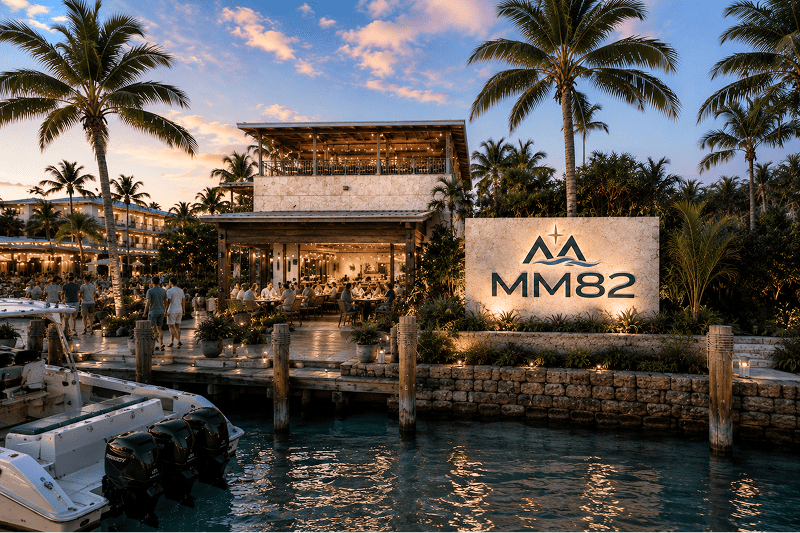
How Meet Up @ MM82 Emerged
As the ecosystem model matured, one opportunity continued to emerge. If Islamorada’s greatest potential lay in creating stronger connections between people, businesses, and experiences, the destination needed a focal point capable of bringing those relationships together.
Rather than adding another standalone attraction, Virtuoso envisioned an environment where visitors, residents, hospitality operators, local businesses, and community organizations could naturally intersect, extending the visitor journey while strengthening the local economy.
That vision became Meet Up @ MM82.
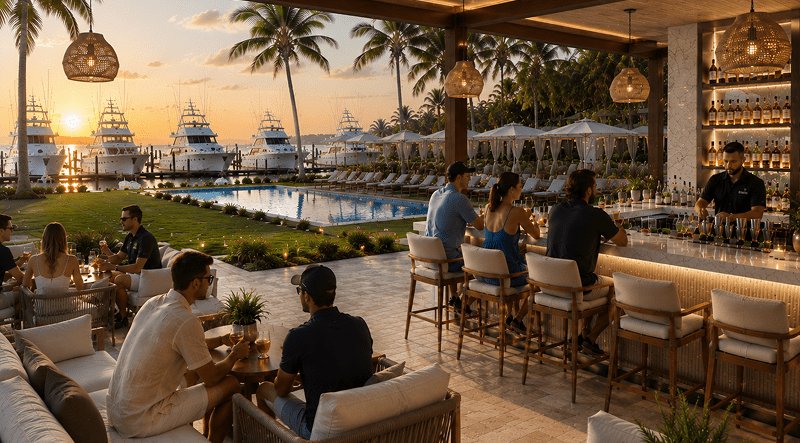
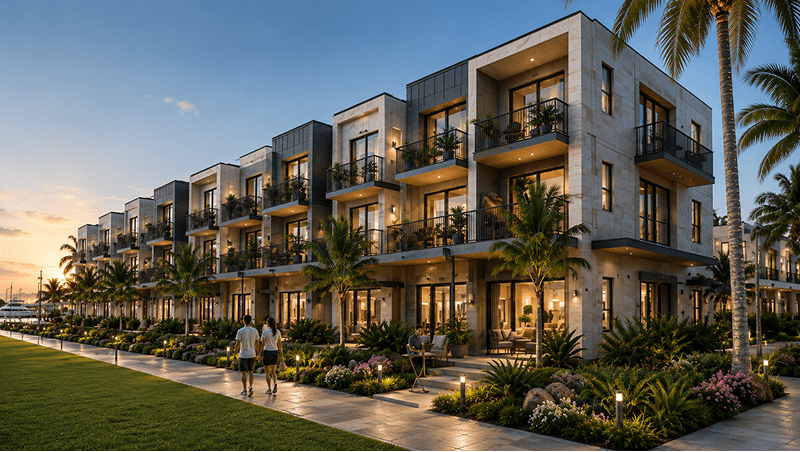
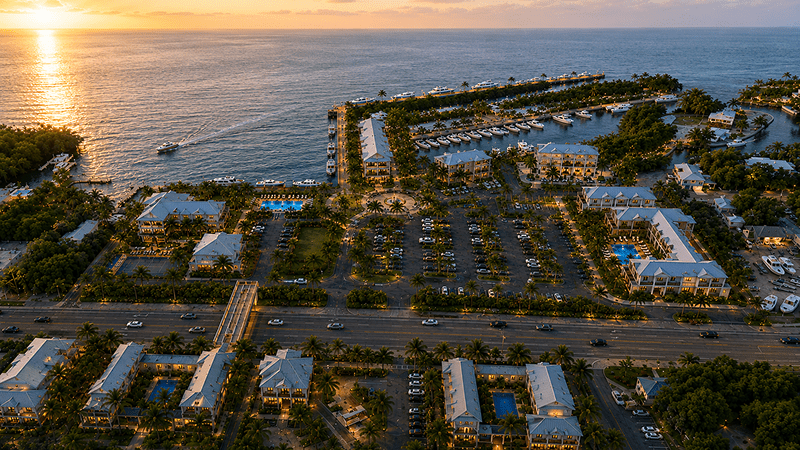
Conceived as a water-first social district, MM82 was designed to shift arrival patterns from highway to harbor and create a shared center of activity that reflected the character of Islamorada itself. Every element of the plan—from the dock network and gathering spaces to waterfront dining, community programming, and public amenities—was informed by the insights uncovered during the research process. Together, they create opportunities for visitors to linger longer, move more easily between experiences, and engage more deeply with the community and its businesses.
Beyond a development project, MM82 became the first physical expression of Virtuoso’s broader destination strategy. It was conceived as connective tissue within the larger ecosystem, strengthening existing businesses, encouraging recurring social rituals, and creating the kind of economic gravity that allows value to build over time rather than dissipate at the end of the day.
“The development emerged from the strategy,” says Kito. “We weren’t forcing a concept onto the destination. We were creating a place that reflected what the destination was already telling us.”
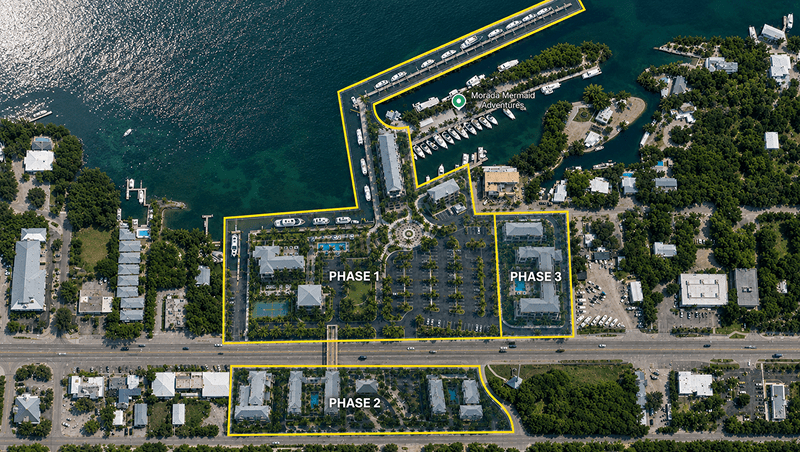
The strategy was intentionally designed to unfold over time. Rather than pursuing large-scale development all at once, Virtuoso created a phased roadmap that allows activity to generate demand, demand to attract investment, and investment to support long-term destination growth. Each phase strengthens the one before it, reducing risk while allowing the community and market to shape what comes next.
Phase 1:
Create Activity
- Create Activity
- Dock network
- Islamorada Social Club
- Waterfront dining
- Public gathering commons
- Food infrastructure
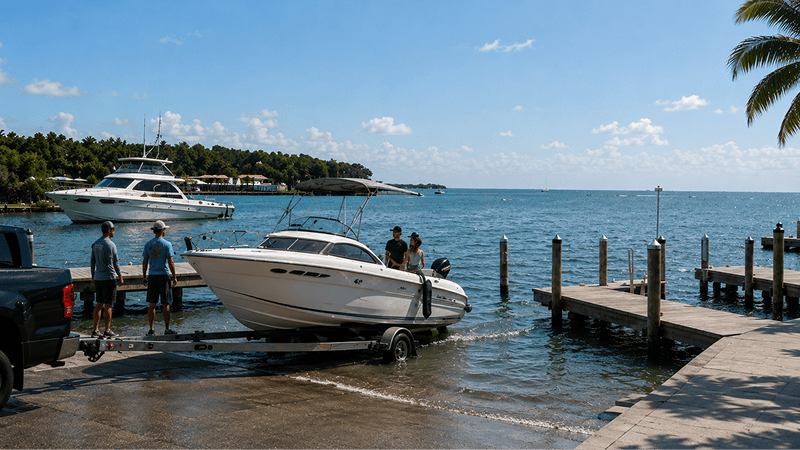
- Public boat access
Phase 2:
Create Stability
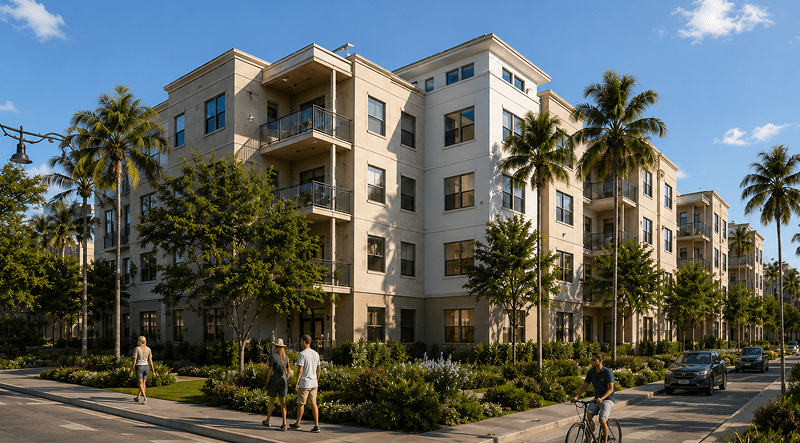
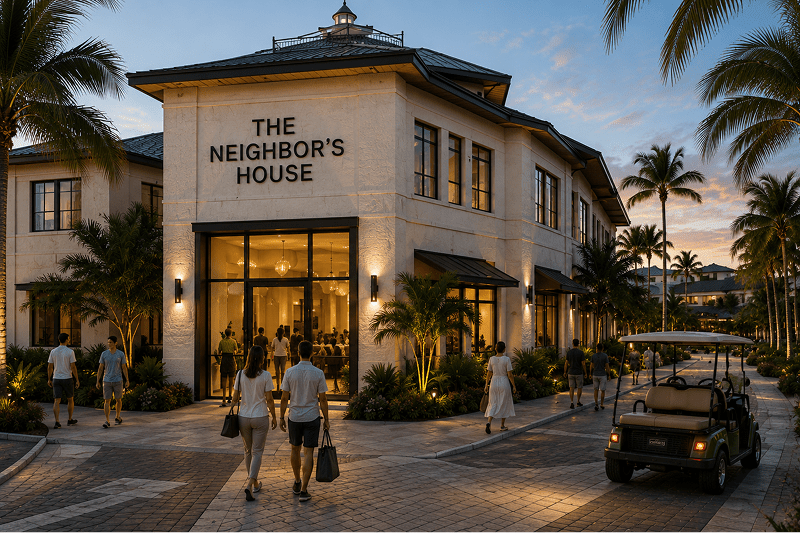
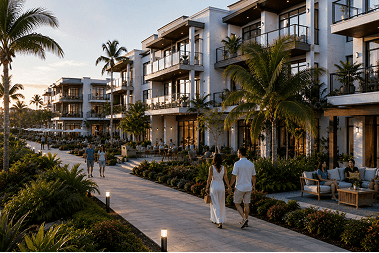
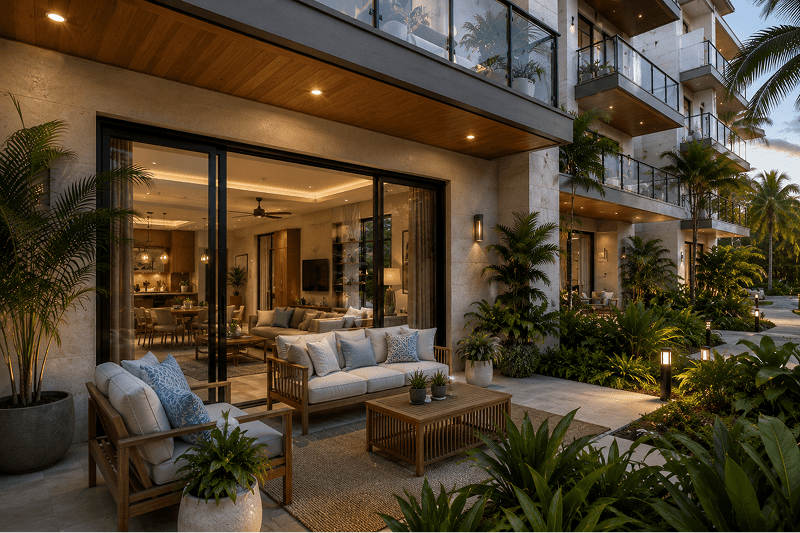
- Luxury residences
- Marketplace
- Workforce housing
- Year-round services
Phase 3:
Create Value
- Boutique hotel
- Wellness retreat
- Signature dining
- Enhanced connectivity
Each phase builds on demonstrated demand, allowing participation and activity to guide future investment decisions.
Designing Economic Gravity
The destination strategy naturally evolved into an investment strategy. Instead of relying on large, upfront development, Virtuoso designed a phased roadmap where each investment creates the conditions for the next. Initial phases establish activity through waterfront access, public gathering spaces, dining, and programming, while later phases expand into residential, hospitality, wellness, and marketplace opportunities as demand grows.
The philosophy behind the approach is simple: Capital follows presence.
As participation increases, so does investor confidence. Growth becomes a response to proven demand rather than speculation, allowing the destination to evolve organically while reducing risk.
“The strongest developments create value before they create scale,” says Kito. “That’s what this roadmap is designed to do.”
The result was a phased capital strategy that balanced ambition with practicality, creating a pathway for private investment, public-private partnerships, conservation-aligned funding opportunities, and long-term value creation.


Investment Philosophy
Orchestrated Clustering Beats Isolated Bets
Every asset should become more valuable because of the assets around it.
Early Activity Reduces Future Risk
Demand should validate future investment.
Public Space Comes First
Shared experiences create the conditions for economic growth.
Presence Drives Capital
The strongest investments follow demonstrated participation, not speculative projections.
Turning Expertise into a System
One question came up repeatedly throughout the project: How do you develop a destination strategy, governance framework, ecosystem model, investment roadmap, and implementation plan in roughly 30 days?
The answer started long before the engagement itself.
Over years of work across economic development, behavioral intelligence, governance, capital planning, and strategic consulting, Virtuoso distilled its methodology into AgentXQ. The platform allows the team to evaluate evidence, uncover relationships, model opportunities, and test strategic scenarios at a speed and scale that would be difficult through traditional planning alone.
AI accelerated the analysis, but it was Virtuoso’s framework and expertise that shaped the outcome.
“The real breakthrough isn’t AI,” says Kito. “It’s the ability to take expertise that normally lives in meetings, spreadsheets, and individual experience and turn it into a repeatable system.”