
The big game is the worst place to judge an idea
So we predicted what would happen after the final whistle
…Using XQ™, Created by BJ Kito
The championship broadcast amplifies everything – attention, reaction, and distortion.
It’s the biggest stage in advertising, but it’s also the noisiest. When budgets peak and expectations spike, even well-made ideas can appear stronger than they are.
To understand what actually lasts, we evaluated game day advertising before they aired (for the first time ever), measuring how ideas behave once the spotlight fades and pressure sets in.
This isn’t a recap. It’s a stress test.

The Amplified Plateau
Why most game day ads win the night – and lose the decade
When exposure peaks, endurance becomes harder to detect. The biggest advertising moment of the year creates a temporary environment where attention is inflated and scrutiny is delayed. Inside that insulation, most campaigns perform well.
But amplification changes how ideas behave.
Once that moment passes, brands face very different forces – repetition, skepticism, cultural memory, and time. Some ideas strenthen under that pressure. Most do not.
That gap between momentary success and long-term value is what we call the amplified plateau.
Insulation vs. Reality
Why the real test starts after the broadcast ends
The first question asked is usually: “Did people like it?” Super Bowl ads benefit from temporary insulation – novelty, goodwill, and collective attention. These conditions protect ideas from immediate stress.
But that insulation doesn’t last.
The real test begins after the game ends, when the more critical question is examined: Once the hype fades, will this idea hold up, or does it fall apart under real-world pressure?
That question rarely gets measured. Until now.
Introducing the XQ Index™
What XQ is and why it exists
The XQ Index is an intelligence framework designed to evaluate whether ideas can survive reality and how they’ll behave as pressure increases.
It was built to answer a question traditional marketing metrics don’t address: not what performs in the moment, but what endures over time.
XQ doesn’t judge creativity or predict popularity. It evaluates structural strength.
What XQ Measures (And What It Doesn’t)
Most advertising metrics track reaction – views, engagement, sentiment, recall.
XQ looks underneath those signals, at the forces that determine whether attention turns into belief, ownership, and lasting brand value.
XQ does not measure:
- Virality
- Likeability
- Awards potential
XQ evaluates:
- Narrative clarity and coherence
- Cultural and ethical alignment
- Resilience under scrutiny and repetition
- Brand ownership potential
- Fragility introduced by scale
How the XQ Index works
Each idea is evaluated across 109 variables spanning human behavior, culture, brand integrity, executional risk, and long-term relevance.
Intrisnsic Strength
Foundational durability
Amplification Energy
Cultural spread potential
Fragility Rate
Vulnerability to decay
Integrity Multiplier
Ethical coherence
Execution Multiplier
Quality of delivery
The Analysis
16 Super Bowl ads, evaluated for long-term success before kickoff for the first time ever
We analyzed 16 Super Bowl ads using XQ scoring before they aired.
The goal wasn’t to guess which ads would trend. It was to understand which ideas were structurally built to last once Super Bowl insulation disappeared.
Field Zones
Where Super Bowl ads actually land
Super Bowl spots don’t fail because they’re bad. They fail because most are built to peak fast. Field zones show where an idea is likely to land after the hype fades: how durable it is, how much it can own, and how quickly it decays.
Mythic 190-200
Owned worldview capable of absorbing attention and evolving without collapsing
Magnetic 160-189
High durability and cultural ownership with significant equity potential
Amplified 120-159
Strong performance optimized for attention with controlled volatility
Resonant 80-119
Clear brand alignment with moderate cultural impact
Functional 40-79
Limited staying power and minimal long-term equity building
Inert 0-39
Minimal impact or cultural resonance
Long-Term Equity Potential
Out of the ads analyzed, only a small number show real long-term equity upside. A handful reinforce positions brands already own. Most perform well in the moment — Magnetic under amplification, but structurally disposable once attention fades.
Michelob Ultra — Rocky IV Lifestyle Infrastructure (Real Signal)
Equity Potential: Very High (Magnetic trajectory)
Strengths:
– Owns a clear lifestyle territory (active living → earned refreshment)
– Nostalgia is structural, not decorative
– Platform stretches across sports, seasons, and format
Limits:
– Nostalgia can overpower the product if overused
– Requires discipline to keep Rocky as a vehicle, not the headline
Lifestyle ownership compounds fast, as long as the brand stays bigger than the reference.
TurboTax – “Now This is Taxes” (Real Signal)
Equity Potential: Very High
Strengths:
– Owns a season of life through repetition
– Platform outlives any celebrity or format
– Trust compounds through consistency, not reinvention
Limits:
– Format fatigue risk over time
– Requires restraint to avoid unnecessary novelty
When trust is the product, institutional consistency beats creative churn.
Uber Eats — Conspiracy Platform (Real Signal)
Equity Potential: Very High
Strengths:
– Operates as a belief system, not a joke
– Infinite extensibility across sports and culture
– Audience actively participates in extending the idea
Limits:
– Entertainment can outpace conversion
– Celebrity chemistry can eclipse product behavior
Myth-making creates massive equity, but it must eventually close the loop to action.
State Farm – “Halfway There” (Borderline)
Equity Potential: Medium-High
Strengths:
– Clear contrast sharpens the value of full coverage
– Modular concept works across scenarios
Limits:
– Defines the brand by opposition, not ownership
– Limited urgency to switch behavior
Strong defense, not expansion — preference reinforcement without myth creation.
Pringles – “Once You Pop”/Sabrina Carpenter (Borderline)
Equity Potential: Medium-High
Strengths:
– Absurdity is a true brand behavior
– High replay and entertainment value
Limits:
– Entertainment compounds; meaning does not
– Cultural heat tied to a narrow time window
Best-in-class snack entertainment. Equity grows slowly, not exponentially.
Hellmann’s – “Meal Diamond” (Borderline)
Equity Potential: Medium
Strengths:
– Reinforces everyday indispensability
– Clear utility in real meal moments
Limits:
– Jingle-based humor decays
– No deeper belief system underneath
Comfort equity, not future-facing meaning.
Boehringer Ingelheim — Health Screening (Borderline)
Equity Potential: Medium
Strengths:
– Anchored in real, unmet behavioral need
– Clear call to action (screening)
– High trust and credibility framing
Limits:
– Low cultural shareability by nature
– Impact depends on post-ad follow-through
Institutional impact without cultural footprint.
Pepsi Zero Sugar — Polar Bear (Borderline)
Equity Potential: Medium
Strengths:
– Bold differentiation through rivalry
– Real taste-switching pathway
Limits:
– Lives in Coke’s shadow
– Symbolism outweighs proof over time
Conversation spikes fade when ownership isn’t forward-looking.
Instacart — Produce Picker (Borderline)
Equity Potential: Medium
Strengths:
– Sharp, specific product differentiation
– Relatable problem-solution framing
Limits:
– Feature-led, not meaning-led
– Cultural ceiling remains low
Functional trust builds steadily. Symbolism builds faster.
Ro — GLP-1 Beyond Weight Loss (Borderline)
Equity Potential: Medium-High
Strengths:
– Unmatched demand alignment
– Strong immediate response
Limits:
– High regulatory and trust sensitivity
– Category volatility suppresses durability
Enormous upside, but meaning must be earned carefully.
Manscaped — Hair With an Eye (False Positive)
Equity Potential: Low-Medium
Why it fails long-term:
– Niche humor limits mass durability
– Joke resets every year
– Recognition compounds, meaning does not
Clear lane, capped ceiling.
Liquid I.V. — Bathroom Vanity (False Positive)
Equity Potential: Low-Medium
Why it fails long-term:
– Creative outweighs product clarity
– Low brand recognition magnifies the issue
– No proprietary usage moment
Charm without encoding evaporates.
Ritz — Shell-Phone / Bowen Yang (False Positive)
Equity Potential: Low
Why it fails long-term:
– Tone without thesis
– Celebrity memory exceeds brand memory
– Product relevance remains vague
Relevance theater, not equity.
Fanatics Sportsbook — Kardashian Curse (False Positive)
Equity Potential: Low
Why it fails long-term:
– Meme dependency without ownership
– Celebrity polarization adds friction
– No clear path from entertainment to behavior
High chatter. Zero half-life.
Bud Light — Wedding Keg Road Trip (False Positive)
Equity Potential: Low
Why it fails long-term:
– Relies on familiarity, not belief
– Extremely sensitive to cultural temperature
– Repetition without escalation = erosion
Stabilization tactic, not an equity builder.
Svedka — AI Dancefloor (False Positive)
Equity Potential: None
Why it fails long-term:
– Novelty without permission
– No human consequence
– Mismatch between brand, concept, and stage
Amplification exposes misalignment faster than creativity can fix it.
RANKINGS
Game day ads, scored for survivability
Michelob Ultra — Rocky on the Slopes
Field Zone:
Amplified
XQ Score: 138.7/200
A winter-sports training spot riffing on Rocky IV to reinforce Michelob Ultra’s “active lifestyle → earned refreshment” lane.
IS
Intrinsic Strength
65
Strong platform architecture: fitness identity + nostalgia gives the idea structure that can extend across sports, seasons, and athlete cameos without collapsing.
AE
Amplification Energy
55
Broad recognition (Rocky) plus modern updates creates cross-generational lift; sports communities naturally share training/discipline content.
FR
Fragility Rate
22 → 11
(effective) Low controversy and high brand permission reduce fragility; remaining exposure is “nostalgia misuse” (if it feels exploited, not honored).
IM
Integrity Multiplier
1.10
Integrity holds because the brand has a long-established “earned refreshment” plan. This reads like continuation, not a pivot.
EM
Execution Multiplier
1.08
Super Bowl-grade spectacle fits the brand tone; high production value and clear pacing make the concept easy to cut down and remix.
Primary Sensitivities
→ Nostalgia must stay a vehicle, not the headline.
→ Fitness positioning must feel inclusive enough to avoid “try-hard” backlash.
Failure Triggers
→ Rocky references become the memory anchor over the product.
→ Competitors reframe the brand as performative fitness signaling.
This is lifestyle infrastructure disguised as nostalgia. The Rocky reference gives instant recognition, but the real asset is the repeatable logic: discipline → reward → social refreshment. To compound equity, Michelob should expand the training world across more sports and seasonal moments while keeping the product as the “earned payoff,” so Rocky never becomes the headline.
Turbo Tax — Now This Is Taxes

Field Zone:
Amplified
XQ Score: 135.0/200
A “calm expert” platform that makes tax season feel manageable by turning competence into something culturally fluent.
IS
Intrinsic Strength
68
Category reframe with unusually high coherence: the creative consistently reinforces “expertise made accessible,” not random comedy.
AE
Amplification Energy
51
Energy is steady, not explosive — taxes have a ceiling, but consistency turns low-shareability into dependable seasonal recall.
FR
Fragility Rate
20 → 8
(effective) Trust equity and platform maturity buffer risk; the main fragility is repetition fatigue after many consecutive appearances.
IM
Integrity Multiplier
1.12
Integrity premium comes from truth: the brand doesn’t trivialize taxes; it reduces anxiety through mastery and clarity.
EM
Execution Multiplier
1.08
Institutional execution: clean message hierarchy, high craft, and repeatable system behavior (not a one-off stunt).
Primary Sensitivities
→ Celebrity must remain a vessel for expertise.
→ Entertainment can’t drift away from reassurance.
Failure Triggers
→ The joke becomes the takeaway instead of competence.
→ Platform starts to feel “everywhere” but hollow.
TurboTax is building seasonal ownership, not a one-night win. The platform works because it reduces anxiety through consistency and “calm competence.” The compounding move is not reinvention. It’s tightening the expert promise every year so the entertainment always routes back to relief, clarity, and trust.
State Farm — Halfway There Insurance

Field Zone:
Amplified
XQ Score: 132.6/200
A fictional competitor turns “mediocre coverage” into a tangible villain, sharpening State Farm’s reliability through contrast.
IS
Intrinsic Strength
62
Strong structural foundation: parody competitor is modular and can map to many life scenarios without losing the thesis.
AE
Amplification Energy
53
Comedic chemistry plus simple premise = high recall with low cognitive load; it’s instantly “gettable.”
FR
Fragility Rate
22 → 8
(effective) Category coolness reduces volatility; remaining drag is ad saturation in insurance.
IM
Integrity Multiplier
1.08
Integrity holds because the brand critiques half-measures, not consumers. Humor supports reassurance rather than cynicism.
EM
Execution Multiplier
1.08
Consistent Super Bowl-level craft with a repeatable device; supports multi-spot rollout.
Primary Sensitivities
→ The parody has to stay fresh.
→ Talent must support the coverage message, not replace it.
Failure Triggers
→ The fake brand becomes more memorable than State Farm.
→ Parody tone slips into mean/negative instead of comforting contrast.
This is category defense with sharp contrast. The fictional competitor makes “full coverage” feel tangible, but the equity upside depends on whether State Farm can convert laughter into action. The compounding move is a conversion bridge. Keep the parody device, but attach it to moments that trigger policy review, quote behavior, or switching urgency.
Uber Eats — Conspiracy Platform
Field Zone:
Amplified
XQ Score: 129.1/200
A recurring conspiracy universe that treats delivery like a cultural constant. Audiences tune in to see the “logic” expand.
IS
Intrinsic Strength
68
Exceptionally coherent platform with elastic rules; conspiracy “proof” structure is repeatable and inherently expandable.
AE
Amplification Energy
63
Meme velocity is top-tier: deadpan conviction + skeptic foil + sports timing creates endless quotables and remixes.
FR
Fragility Rate
25 → 8
(effective) Mature platform reduces backlash; biggest fragility is sequel fatigue and celebrity reliance overpowering product meaning.
IM
Integrity Multiplier
1.08
Integrity holds because absurdity is explicit — no overclaim, no virtue posturing; humor is the deal.
EM
Execution Multiplier
1.10
Executional excellence compounds: casting, pacing, and comedic rhythm are consistently high craft.
Primary Sensitivities
→ Must escalate, not re-run the same beats.
→ Tone must stay sincerely committed (not winking).
Failure Triggers
→ Chemistry becomes the main event.
→ Food integration turns decorative instead of “causally proven.”
Uber Eats is operating as a comedic belief system. The audience comes back for the world logic, not the utility pitch. The main vulnerability is the entertainment-to-ordering gap. The compounding move is to add light behavioral anchors (ordering cues, product “proof,” ritualized CTAs) without puncturing the myth, so the platform stays funny and more causally tied to the brand.
Pringles — Once You Pop/Sabrina Carpenter

Field Zone:
Resonant
XQ Score: 118.2/200
A pop-culture injection into a legacy tagline — high moment energy, lighter long-term structure.
IS
Intrinsic Strength
57
Strong brand asset, but meaning depth is thin; platform depends more on vibe than worldview.
AE
Amplification Energy
51
Sabrina delivers lift and replay, especially in short-form; however, snack demand doesn’t spike from celebrity alone.
FR
Fragility Rate
25 → 12
(effective) Celebrity time-window risk: if cultural heat cools, the campaign’s energy drops fast.
IM
Integrity Multiplier
1.02
Neutral integrity: partnership reads transactional rather than identity-true.
EM
Execution Multiplier
1.05
Strong execution and channel fit; limited architectural depth for multi-season compounding.
Primary Sensitivities
→ Celebrity relevance window is narrow.
→ “Once You Pop” must feel current, not museum-piece nostalgia.
Failure Triggers
→ Feels like rented attention.
→ Competitive parity: other snack brands run the same celebrity play.
This is a high-spark cultural attachment that boosts salience, but it doesn’t yet build meaning that lasts beyond the celebrity moment. The compounding move is to treat Sabrina as a bridge, not the engine — turn “unhinged obsession” into a repeatable tone system (characters, escalation rules, visual language) that can survive after the cultural heat cools.
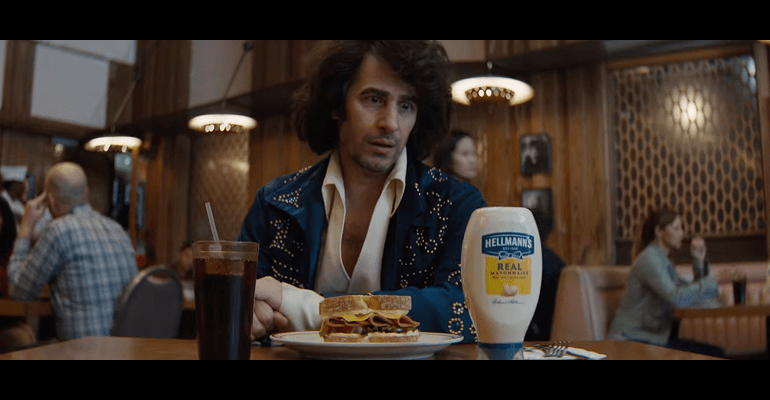
Hellmann’s — Meal Diamond
Field Zone:
Resonant
XQ Score: 117.1/200
A comfort-forward reframing of mayo as “meal glue,” designed to live in everyday food decision moments.
IS
Intrinsic Strength
58
Solid brand alignment: supports repositioning into “meal solution,” not just condiment.
AE
Amplification Energy
48
Category ceiling remains, but clever framing lifts memorability and keeps it social-friendly.
FR
Fragility Rate
22 → 8
(effective) Very low controversy; biggest risk is fatigue from crowded food-hack content.
IM
Integrity Multiplier
1.05
Integrity premium from utility: product truth is credible and familiar.
EM
Execution Multiplier
1.05
Clean structure supports cutdowns, retail tie-ins, and seasonal variants.
Primary Sensitivities
→ Must stay joyful, not preachy or instructional.
→ Food culture saturation demands freshness.
Failure Triggers
→ Reads like a recipe tutorial.
→ Competitors take the same “meal upgrade” lane.
Hellmann’s wins through everyday utility. It’s a brand role play (meal glue), not a hype play. The ceiling is cultural energy, so the path to compounding is breadth: expand across more occasions and formats — family dinners, quick lunches, entertaining, summer grilling — and let the concept travel through cutdowns, retail, and recipe ecosystems where usage becomes habit.
Boehringer Ingelheim — Health Screening
Field Zone:
Resonant
XQ Score: 109.4/200
A PSA-style, credibility-led message built for trust and action rather than spectacle.
IS
Intrinsic Strength
60
Strong alignment with real behavioral need: screening gaps are genuine, and the message has clear purpose.
AE
Amplification Energy
46
Limited meme energy by nature; amplification comes from authority, clarity, and seriousness.
FR
Fragility Rate
25 → 12
(effective) Regulated category elevates baseline friction; careful tone lowers backlash and skepticism.
IM
Integrity Multiplier
1.05
Integrity is earned through education-first framing; less “selling,” more public-health posture.
EM
Execution Multiplier
1.02
Execution is constrained but coherent; channel fit isn’t perfect, yet clarity makes it work.
Primary Sensitivities
→ Must empower rather than scare.
→ Brand presence must remain credible, not opportunistic.
Failure Triggers
→ Feels like pharma ad wearing a PSA costume.
→ Message creates concern without an easy next step.
This is built for trust + action, not virality. Its strength is clarity and behavioral intent (screening), which makes it commercially efficient even if it doesn’t dominate culture. The compounding move is follow-through infrastructure — make the post-ad pathway frictionless (resources, partners, reminders), so the broadcast becomes the front door to real behavior change.
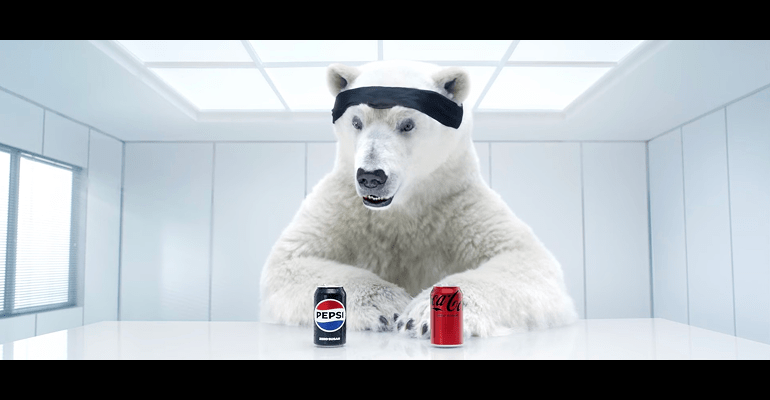
Pepsi Zero Sugar — Polar Bear
Field Zone:
Resonant
XQ Score: 101.3/200
A rivalry spectacle designed to trigger debate and taste-switching behavior using an aggressive symbolic move.
IS
Intrinsic Strength
54
Differentiation is bold, but coherence is strained because the symbol is borrowed, even if strategically intentional.
AE
Amplification Energy
49
Rivalry drama creates instant tension and conversation; side-taking is built in.
FR
Fragility Rate
28 → 9
(effective) Rivalry permission reduces fragility, but polarization remains (Coke loyalists + “desperation” perception).
IM
Integrity Multiplier
1.02
Neutral integrity: premise is historically legitimate, execution risks feeling like borrowing.
EM
Execution Multiplier
1.00
Clean and clear, but less extensible as a platform without additional “proof systems.”
Primary Sensitivities
→ Must read confident, not bitter.
→ Competitive response shapes meaning.
Failure Triggers
→ Reminds people of Coke more than Pepsi.
→ No modern proof point beyond symbolism.
The rivalry delivers instant conversation, but symbolism alone won’t compound, especially when the borrowed asset risks reinforcing Coke. The compounding move is to convert the competitive hit into a proof system: participatory taste challenges, social receipts, retail activations. Make “we win on taste” a behavior people repeat, not a claim people watch.
Instacart — Produce Picker
Field Zone:
Resonant
XQ Score: 97.6/200
A micro-feature story that converts an everyday annoyance into product differentiation.
IS
Intrinsic Strength
53
Strong clarity: one feature → one frustration → one solution; limited symbolism but effective architecture.
AE
Amplification Energy
45
Utility categories struggle for hype; lift comes from relatability and tight comedic framing.
FR
Fragility Rate
25 → 9
(effective) Low controversy; main fragility is competitive substitution and feature-copy risk.
IM
Integrity Multiplier
1.02
Credibility is helped by specificity — real feature, real benefit, minimal overclaim.
EM
Execution Multiplier
1.00
Straightforward execution supports quick cutdowns and repeated use.
Primary Sensitivities
→ Must feel charming, not trivial.
→ Talent must keep the feature central.
Failure Triggers
→ Benefit feels too small to care about.
→ Competitors mirror feature messaging quickly.
This is feature-led differentiation done correctly: one relatable pain point, one clean solution. To compound, Instacart should ladder these micro-wins into a platform — “we get the details right” — and repeat the format annually with new specifics so superiority feels cumulative, not episodic.
Ro — GLP-1 Beyond Weight Loss
Field Zone:
Resonant
XQ Score: 90.4/200
A high-demand category move that reframes GLP-1s around health outcomes, with real upside and real scrutiny.
IS
Intrinsic Strength
59
Exceptional need-fit and timing; brand coherence is still building, but category momentum supports structure.
AE
Amplification Energy
52
Demand energy is strong because the conversation is already culturally active.
FR
Fragility Rate
30 → 19
(effective) Volatility remains high (regulatory, cultural temperature, category skepticism).
IM
Integrity Multiplier
0.98
Slight trust compression because DTC health brands have thinner credibility reserves.
EM
Execution Multiplier
0.95
Execution ceiling is constrained by compliance nuance and first-time scale.
Primary Sensitivities
→ Must anchor in health, not vanity.
→ Language precision is everything.
Failure Triggers
→ Bad GLP-1 headlines flip sentiment overnight.
→ Message collapses into weight-loss shorthand.
Ro has enormous demand upside, but the category’s volatility suppresses trust and execution multipliers. The compounding move is to build credibility systems around the message — experts, transparent education, outcomes framing, and a disciplined second beat — so the brand earns permission to stay in the conversation after the broadcast spike.
Manscaped — Hair With an Eye
Field Zone:
Functional
XQ Score: 78.6/200
A niche humor brand doing what it does best — clear ownership, limited mass comfort.
IS
Intrinsic Strength
52
Category ownership is clear; concept depth is thinner beyond the joke surface.
AE
Amplification Energy
46
Moderate replay and meme potential inside the right demo; less universal for a family broadcast.
FR
Fragility Rate
28 → 12
(effective) Taste-line sensitivity remains: funny-relatable vs. “too gross.”
IM
Integrity Multiplier
0.98
Authentic in-lane, but doesn’t generate trust premium.
EM
Execution Multiplier
0.98
Competent execution, slightly capped by scale and polish compared to legacy players.
Primary Sensitivities
→ Must stay tasteful enough for broad audiences.
→ Niche humor must feel confident, not forced.
Failure Triggers
→ Tips into crude in a family context.
→ Category expands and removes differentiation.
Manscaped’s lane is clear, but Super Bowl scale exposes the ceiling of niche humor. To compound equity, the brand needs to widen acceptability without losing edge — shift from pure punchline toward self-care legitimacy (still funny, but more universally “okay to talk about”) so the brand can climb from niche recall to broader trust.
Liquid I.V. — Bathroom Vanity
Field Zone:
Functional
XQ Score: 76.7/200
An intimacy-first tonal contrast that risks leaving viewers entertained but unclear on purpose.
IS
Intrinsic Strength
46
Distinct setting, weaker linkage to hydration logic; concept asks the audience to connect the dots.
AE
Amplification Energy
39
Low shareability compared to spectacle; niche recognition constrains energy.
FR
Fragility Rate
22 → 15
(effective) Not controversial, just at risk of indifference and weak imprint.
IM
Integrity Multiplier
1.00
Neutral integrity: credible promise, but doesn’t create belief advantage.
EM
Execution Multiplier
0.98
Simple execution is scalable, but may not cut through without stronger product anchoring.
Primary Sensitivities
→ Must land as charming, not confusing.
→ Needs clearer “what it is / why now.”
Failure Triggers
→ Song/performance becomes the only memory.
→ Audience exits without understanding the product.
The ad’s advantage is tonal contrast (small, intimate), but the risk is weak product encoding — viewers may remember the performance more than the why. The compounding move is to anchor the same format in clear hydration occasions (travel, workouts, hangovers, long days) and repeat the device until it becomes a recognizable brand signature, not a one-off mood.
Ritz — Shell-Phone / Bowen Yang
Field Zone:
Functional
XQ Score: 73.9/200
A clever surreal moment that wins on tone, loses on why Ritz is essential.
IS
Intrinsic Strength
49
Concept is funny, but thesis is thin; product role isn’t strengthened.
AE
Amplification Energy
42
Talent-driven replay value, limited cultural momentum beyond the moment.
FR
Fragility Rate
23 → 13
(effective) Safe but crowded; main risk is forgettability.
IM
Integrity Multiplier
1.00
Neutral: on-brand enough, not belief-building.
EM
Execution Multiplier
1.00
Professional, but unremarkable in a high-spectacle field.
Primary Sensitivities
→ Humor must attach to a usage occasion.
→ Snack competition demands clearer “why us” logic.
Failure Triggers
→ That Bowen ad” effect.
→ No lift in consideration because the product isn’t the point.
This is tone-first entertainment without a strong usage thesis, which keeps it in “momentary funny” territory. The compounding move is to root the humor in an occasion people actually buy for — hosting, pairing, party platters, after-school snacking — so the comedy reinforces a purchase trigger instead of floating as cultural fluff.
Fanatics — Kardashian Curse
Field Zone:
Functional
XQ Score: 65.8/200
A pop-culture reference built to spark chatter, but with limited proprietary brand meaning.
IS
Intrinsic Strength
47
Clever lore, weaker brand encoding; concept requires familiarity and brand recognition to fully land.
AE
Amplification Energy
45
Lift comes from celebrity + internet myth; energy is borrowed more than built.
FR
Fragility Rate
28 → 15
(effective) Betting scrutiny + polarizing celebrity keeps fragility elevated.
IM
Integrity Multiplier
0.98
Transactional feel suppresses trust — attention bait more than brand belief.
EM
Execution Multiplier
1.00
Adequate craft, limited architecture for long-term repetition.
Primary Sensitivities
→ Celebrity heat is volatile and polarizing.
→ Sports betting fatigue is rising.
Failure Triggers
→ Curse reference overwhelms the product proposition.
→ Brand gets coded as celebrity excess.
The campaign spikes talk but doesn’t build proprietary meaning — celebrity heat and betting scrutiny raise fragility while brand ownership stays thin. The compounding move is to make the betting experience (tension, rituals, community, game-day behavior) the hero, using celebrities only as entry points, not the core reason to remember the brand.
Bud Light — Wedding Road Trip

Field Zone:
Functional
XQ Score: 42.5/200
A stabilization ad: designed to be safe, familiar, and non-provocative while the brand rebuilds integrity.
IS
Intrinsic Strength
42
Identity fracture keeps the architecture weak; concept is intentionally conservative.
AE
Amplification Energy
37
Low energy because restraint is the strategy; audience fragmentation limits lift.
FR
Fragility Rate
42 → 23
(effective) High base friction remains — trust and polarity issues don’t disappear with one safe ad.
IM
Integrity Multiplier
0.82
Integrity deficit compresses everything; the trust bottleneck dominates the equation.
EM
Execution Multiplier
0.95
Institutional capability exists, but creative ceiling is capped by “don’t risk it” posture.
Primary Sensitivities
→ Any cultural signal can reignite controversy.
→ Recovery requires multi-year consistency.
Failure Triggers
→ “Boring” becomes the headline.
→ Political voices weaponize the spot again.
This is a stabilization spot constrained by integrity recovery — safe, familiar, intentionally non-provocative. The compounding move is radical consistency: same tone, same audience, same message over time, rebuilding trust reserves before attempting bolder creative swings. Until IM rises, bigger creative risk won’t pay back.
Svedka
Field Zone:
Inert
XQ Score: 33.2/200
An AI-forward dance concept that signals novelty without earned brand truth, emotional stakes, or clear product meaning.
IS
Intrinsic Strength
35
Weak identity coherence: value vodka + AI dancefloor doesn’t naturally connect to a reason-to-believe.
AE
Amplification Energy
32
Novelty exists, but relevance doesn’t, so energy doesn’t convert into shareability.
FR
Fragility Rate
38 → 26
(effective) AI fatigue + low community buffer + premium-stage mismatch creates high fragility.
IM
Integrity Multiplier
0.88
Integrity compresses because the cultural posture feels borrowed and tech-first.
EM
Execution Multiplier
0.90
Scale and polish expectations expose constraints; execution struggles to overcome skepticism.
Primary Sensitivities
→ AI ads are increasingly cliché and polarizing.
→ Value positioning clashes with premium media context.
Failure Triggers
→ Execution reads generic or stock-smooth.
→ Viewers can’t connect the world to a purchase reason.
The Super Bowl amplifies the mismatch: AI novelty doesn’t equal relevance, and the brand lacks permission to occupy “innovation culture” credibly at this scale. The compounding move is not iterating the same concept. It’s rebuilding coherence in environments Svedka can control (on-premise, experiential, targeted digital), creating a real brand reason-to-believe before attempting mass-stage spectacle again.
What the Super Bowl Rewards – and What It Doesn’t
The Super Bowl is exceptionally good at producing one outcome: high attention with low tolerance for failure.
Most of this year’s work is polished, likable, culturally fluent, and safe. It performs exactly as intended in the moment and then quickly returns to baseline.
This isn’t a creative failure. It’s a structural one.
Amplified is the new default
Across the field, most campaigns land in the same place: amplified.
They generate conversation.
They avoid failure.
They perform cleanly in the moment.
That level of performance is no longer exceptional. It’s the industry’s comfort zone.
When Amplified becomes the default, the Super Bowl stops separating ideas by strength and starts flattening them by restraint. You get competence instead of conviction. Entertainment instead of ownership. Noise instead of endurance.
Only a small number of ideas have the structural capacity to absorb amplification without losing their shape — to hold meaning once the moment passes.
When Attention Lies
XQ scoring doesn’t measure whether an ad “worked.” It separates ideas that create belief from ideas carried by attention. It shows when amplification is reinforcing meaning and when it’s masking weakness.
That line is where brands compound equity or stall without realizing it.
What Comes Next
This case study proves something the industry hasn’t been able to see clearly before.
XQ makes it possible to evaluate ideas before they hit the world — not for how they perform in the moment, but for how they behave once pressure, scale, and scrutiny set in. Applied here, it shows why so many Super Bowl ads peak fast and why only a few have the structure to endure.
As media gets louder and stakes get higher, advantage won’t come from guessing better or testing harder. It will come from knowing which ideas can survive reality and which can’t.
This case study is the first signal of that shift.